
Legault Le gone
MOU was already dead

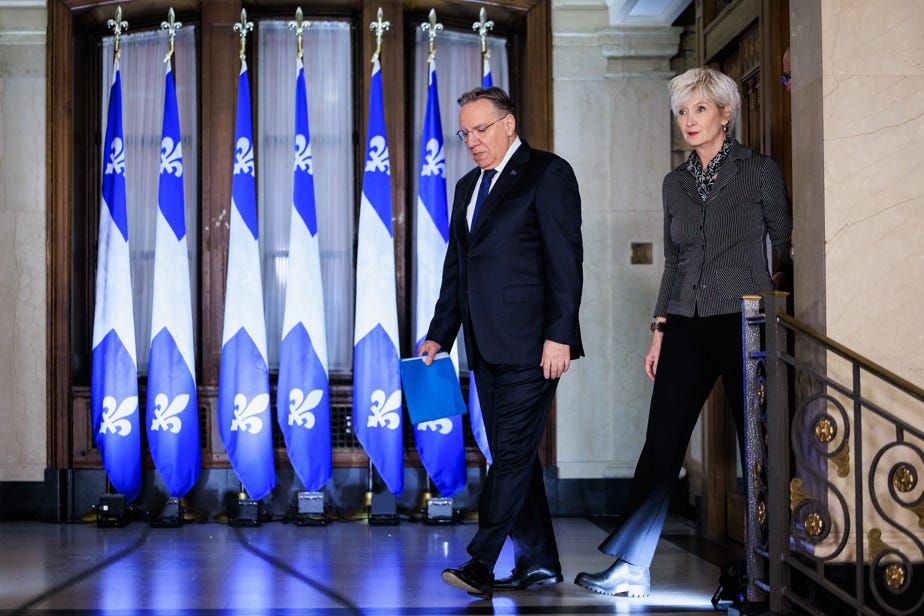
Francois Legault did to his party what Andrew Furey did to his party in Newfoundland and Labrador: he bailed suddenly a few months before a looming provincial election.
Legault’s Cabinet and caucus may have known a bit in advance, according to La presse and while there has been speculation for a year or more about his resignation, Legault insisted in year end interviews that he would stay unless his health gave out or there was no public support for him.
“Dans une tournée d’entrevues en fin d’année, François Legault martelait qu’il allait rester en poste et se représenter aux élections de 2026. Il faut comprendre qu’il ne pouvait émettre de doute à ce sujet sans affaiblir son leadership. Auparavant, il avait déjà dit que deux facteurs conditionneraient sa décision de rester en poste ou pas : la santé et l’appui de la population,” Tommy Chouinard wrote in La Presse. Stay and fight the next election unless his health was not good or there wasn’t public support.
Polls have long put Coalition Avenir Quebec well back from the favoured Parti Quebecois but in the most recent poll only 11% of those who responded said they would support CAQ.
“On a human level, it’s difficult,” according to La Presse’s Paul Journet. “Mr. Legault is no ordinary leader. He’s the founder of his party. He doesn’t want to lead it to its downfall. And he doesn’t want to end his career leading the worst debacle in Quebec’s contemporary history. Nor does he want to end up an opponent of independence, a project he once fought for.” [Translation]
Legault’s resignation will have no impact on the Churchill Falls deal. That was already dead when Newfoundland and Labrador premier Tony Wakeham announced a three-person review of the deal. A detail that many reported at the time but missed in significance was that - as energy minister Lloyd Parrott said in December - there are no substantive talks between NALCOR and Hydro-Quebec on the MOU and apparently haven’t been since the election.
The deadline for final agreements on the Churchill deal is 26 April 2026 and the talks were already reportedly behind schedule. Since talks are suspended in all but name only, there’d be no way to come to a final agreement by the deadline even without the review commission, the report from which is due four days after the deadline for final agreements.
The de facto death of the deal happened well before Legault’s announcement but his decision makes it easier for Premier Wakeham to abandon the commitment on a referendum on any deal, let alone the one that is now dead anyway. It also gives Wakeham and his administration time to prepare for substantive talks with the next administration in Quebec or with anyone interested in developing Gull Island or buying Churchill Falls electricity after 2041.
Many assume the PQ will be disinterested in developing Gull and extending Churchill Falls but there is no reason to beleive that’s true. Legault’s CAQ administration is no less nationalist than any PQ administration - Legault was a PQ cabinet minister after all - and earlier progress on developing Gull Island 23 years ago came from a PQ administration.
The biggest impact in Newfoundland and Labrador of Legault’s resignation will be on the provincial Liberals and their engineering student who have championed the deal with greater and greater zeal since they lost the October general election. Now they have nothing to talk about.